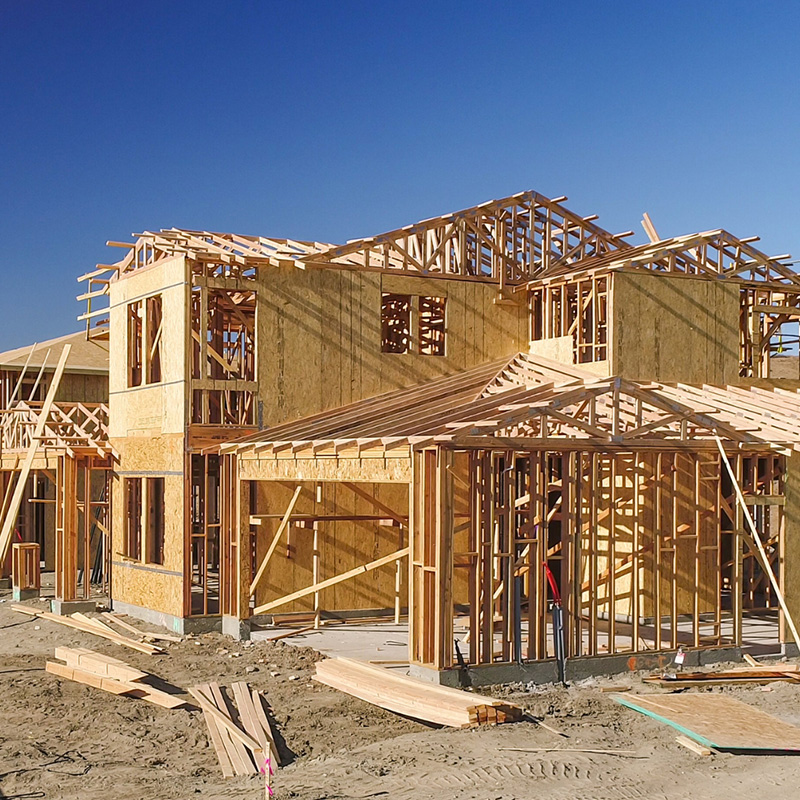
Residential construction activity has recorded a welcome improvement, but industry leaders are warning that the current pace of development remains insufficient to achieve the nation’s ambitious housing supply objectives. Despite an increase in dwelling commencements, concerns persist about whether enough homes can be delivered to meet future population and household requirements.
The latest Australian Bureau of Statistics (ABS) figures show that dwelling commencements increased by 7% during the June 2026 quarter, providing some encouragement for a construction sector facing considerable pressure to increase housing supply.
Work commenced on 52,201 dwellings during the quarter, demonstrating the scale of residential construction activity already taking place across the country. However, industry representatives argue that stronger and more consistent growth will be required if future housing targets are to be achieved.
The figures reveal different performances between detached housing and apartment construction. House commencements increased by 11.6% during the June quarter, while apartment commencements declined slightly by 0.1%.
Although quarterly movements varied between the two sectors, both recorded increases over the preceding 12 months. This suggests that residential construction activity has improved compared with the previous year, even though the recovery remains uneven.
Detached housing and apartment developments face different financial and operational challenges. House construction is often influenced by land availability, infrastructure provision and the capacity of residential builders to deliver projects efficiently.
Larger apartment developments generally involve more complex financing arrangements, substantial upfront costs and longer planning and construction processes. These differences can affect how quickly approved developments progress into construction.
The latest state figures show that Victoria recorded the largest number of dwelling commencements during the June quarter, with construction starting on 16,239 homes.
Queensland followed with 11,671 dwelling starts, reinforcing its position as one of the country’s major residential construction markets.
New South Wales ranked third, recording 11,252 commencements, while Western Australia accounted for 7,240. South Australia recorded 3,913 dwelling starts during the quarter.
These figures demonstrate the significant contribution of the larger states to national housing construction activity. They also highlight the substantial number of additional homes required across multiple regions to accommodate future demand.
Queensland’s construction performance is particularly relevant given the housing requirements associated with population growth and continued demand across Brisbane, the Gold Coast and Sunshine Coast.
However, statewide commencement figures do not necessarily indicate whether new homes are being delivered in the locations or property categories experiencing the greatest shortages.
The suitability of new housing depends on factors including affordability, access to employment, transport connections and the needs of different household types.
Property Council Group Executive Policy and Advocacy Matthew Kandelaars says the country remains a considerable distance from achieving its housing ambitions under the current development trajectory and policy environment.
His concerns are reinforced by the latest Property Council industry sentiment survey, which found that confidence has fallen to its lowest level since the pandemic.
Weak industry confidence can have significant implications for future construction activity. Residential development projects frequently require substantial financial commitments well before building begins.
Developers must assess construction costs, financing expenses, expected sales revenue and the likelihood of completing projects within commercially viable timeframes.
When confidence deteriorates, some projects may be delayed, redesigned or abandoned. This can reduce the pipeline of future housing even when current construction statistics show improvement.
Kandelaars also identifies investment conditions and workforce capacity as major obstacles to increasing housing supply.
Residential construction requires considerable private investment, particularly for larger developments where substantial capital must be committed before properties are completed.
Policies that increase development costs or create uncertainty can influence whether proposed projects proceed. At the same time, the availability of skilled workers remains essential to delivering additional homes.
Builders and developers rely on tradespeople across numerous disciplines, including carpentry, plumbing, electrical work and structural construction.
When labour availability is constrained, projects may experience delays, higher costs or difficulties maintaining construction schedules.
These pressures can affect development feasibility and ultimately influence the cost of newly completed housing.
The interaction between investment confidence and workforce capacity is particularly important because additional planning approvals alone cannot guarantee that more homes will be completed.
Projects must remain financially viable and have access to the labour, materials and infrastructure required for construction.
For property buyers, continued housing supply constraints may influence availability and competition within established residential markets. When new construction fails to keep pace with demand, existing homes can remain an important source of accommodation.
For investors, the rate of new housing delivery can also influence rental availability and longer-term market conditions.
The June quarter figures provide some encouragement, with 52,201 dwelling commencements and overall growth of 7%. Nevertheless, one stronger quarter does not resolve the longer-term challenge of delivering sufficient housing.
Sustained improvement will require greater development confidence, practical policy settings, reliable infrastructure provision and adequate workforce capacity.
The latest ABS figures demonstrate that residential construction activity is improving, but the Property Council’s concerns highlight the considerable work still required.
Achieving national housing targets will ultimately depend on creating conditions that support consistent investment and construction activity, allowing more homes to be delivered where they are needed.