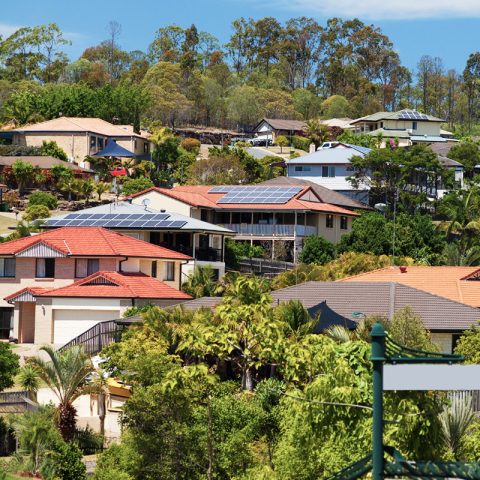
There is a lot of talk about an investor exodus. The evidence is more nuanced
Since the May 2026 Federal Budget, property conversations have been dominated by negative gearing and capital gains tax reform. In parts of south east Queensland, agents have reported a noticeable reduction in investor enquiry. That has fed a simple narrative: investors are leaving Brisbane.
There is clearly a change in sentiment, but it is too early to call it a permanent exodus. The most recent official ABS housing lending data available at the time of writing covers the March quarter, before the Budget. It showed investor loan commitments nationally fell 5.3 per cent over the quarter but remained 18.8 per cent higher than a year earlier. The first June quarter figures, due 14 August 2026, will be much more informative.
Why some investors are reconsidering established property
The reason for the hesitation is straightforward. Under the announced reform, an investor buying an established residential property after 7:30pm AEST on 12 May 2026 will, from 1 July 2027, no longer be able to deduct a rental loss against unrelated income such as salary. Losses can still be applied against residential property income and carried forward.
For a highly geared investor buying a low yielding established house, that can materially change annual cash flow. The capital gains tax framework is also changing from 1 July 2027. Investors therefore have more numbers to model before making an offer.
Market behaviour has already softened
Cotality’s July 2026 Housing Chart Pack said Budget changes and affordability pressures had contributed to weaker buyer demand. Across the capitals, vendors were increasingly choosing private treaty campaigns, auction withdrawals had risen and median vendor discounting had increased to 3.6 per cent.
ABC reporting from south east Queensland in July included an Ipswich agent who said investor demand in his market had fallen sharply. That is a useful on the ground signal, but it is one market participant’s experience rather than a measure of all Brisbane investors. Good analysis separates anecdotes from confirmed lending and transaction data.
Brisbane prices have also lost momentum
PropTrack reported that Brisbane’s median dwelling price fell 0.2 per cent in June to around $1.073 million, the first monthly fall in three and a half years. That followed very strong annual growth earlier in 2026. Cotality data for late June also showed Brisbane values easing over the month while remaining substantially higher than a year earlier.
This matters because investor behaviour and prices can reinforce each other. If investors become more cautious, competition can reduce. If prices soften, some investors may wait. On the other hand, better buying prices can eventually attract investors back, particularly where rents remain strong.
The Inner North rental story has not disappeared
Murray McCarthy’s June 2026 Inner North report shows vacancy below 1.2 per cent across the precinct. Wilston houses were recorded at 0.0 per cent vacancy, Newmarket houses 0.3 per cent, Kedron houses 0.6 per cent and Stafford houses 0.5 per cent. Unit vacancy was also tight in several suburbs.
Rents had risen in many markets. Newmarket units showed a 15 per cent annual increase in median asking rent in the report, while Wooloowin houses were up 13 per cent. That does not cancel the tax changes, but it shows why some investors may continue to see value in Brisbane where rental demand is deep.
Investors may shift rather than disappear
One likely outcome is a change in what investors buy. Qualifying new builds retain negative gearing under the new framework. Established properties with stronger yields may become more attractive than low yielding prestige assets for some investors. Others may reduce leverage or prioritise properties with better prospects for rental growth.
That shift could create different competition patterns. Owner occupiers may face fewer investors for some established homes, while new townhouse, apartment and house and land markets could attract more investor attention.
What owner occupiers should take from this
If investor participation falls in the part of the market you are targeting, that can improve your negotiating position. It does not mean you should buy a compromised property simply because competition is lower. Use the quieter environment to inspect carefully, organise due diligence and compare recent sales.
It is also worth remembering that owner occupiers and investors do not always compete for exactly the same stock. A renovated family house in a premium school catchment may still have strong owner occupier demand even if investor activity has dropped.
What investors should take from this
Do not make a decision from the phrase ‘negative gearing is gone’. It is not. Understand the actual rules, model the cash flow and decide whether established or new property better fits your circumstances. Consider rent, vacancy, ownership costs, land, building quality, future supply and resale demand.
The next useful evidence will be the ABS June quarter lending release on 14 August. After that, transaction and price data through the spring selling season will give a clearer picture of whether the investor retreat is temporary, structural or simply a shift towards different property types.
FAQs
Are investors definitely leaving Brisbane? There are credible reports of weaker investor activity in some markets, but official post Budget lending data was not yet available when this article was prepared.
When will better data be available? The ABS June quarter 2026 Lending Indicators are scheduled for release on 14 August 2026.
Could investors move towards new builds? Yes. Qualifying new builds retain negative gearing under the announced reforms, which creates a stronger tax incentive than for newly purchased established property.