Registered clubs control significant areas of land that could potentially play a role in increasing housing supply without requiring the clubs themselves to close. Research by the McKell Institute has examined surplus land associated with golf clubs, bowling clubs, RSLs and leagues clubs, identifying an opportunity to use underutilised portions of these properties for residential development. In New South Wales alone, the analysis suggests the available land could support tens of thousands of additional dwellings.
The proposition is based on unlocking parts of club sites that are not essential to their primary activities rather than replacing the clubs. This distinction is central to the model because it aims to retain community facilities and existing operations while making better use of land that may currently generate limited value for members or the surrounding community.
The McKell Institute describes surplus registered-club land as a “significant and overlooked” potential source of housing supply. Registered clubs are among the largest private institutional landowners, meaning even the partial redevelopment of appropriate sites could collectively make a meaningful contribution to dwelling numbers.
Location is another important feature of the opportunity. Club sites are often situated in established communities rather than on the distant edges of metropolitan areas. Many are in prime locations and are already within walking distance of public transport. These characteristics can make them particularly relevant to housing discussions because transport accessibility and proximity to established services are important considerations when increasing residential density.
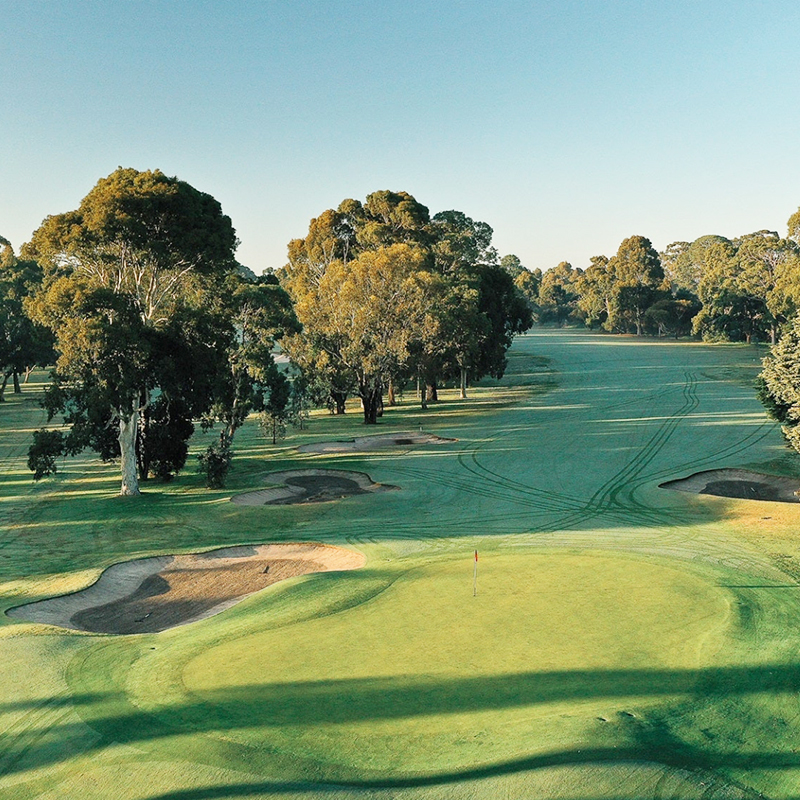
Under the model considered by the report, clubs would retain their core operations. Development would instead occur on surplus sections of their sites. Examples include overflow car parks, underused function areas, driving ranges or greens that could be consolidated. The intention is therefore not to assume that every part of a club property should be converted to housing.
This approach potentially allows clubs to reconsider how efficiently large landholdings are being used. A site may have been configured decades ago for different membership numbers, transport habits or operational requirements. Areas that were once considered necessary may no longer be used to their full capacity, creating opportunities to accommodate housing while maintaining the activities that members value.
The report explicitly states that the proposed housing can be delivered without closing a single club. That principle is likely to be important to community acceptance. Golf, bowling, RSL and leagues clubs can provide recreational facilities, meeting spaces and social infrastructure, so proposals that preserve those functions may be viewed differently from plans that require an entire site to cease operating.
Planning rules, however, remain a significant obstacle. In New South Wales, club land is often zoned for Private Recreation. That zoning can prevent or complicate residential development even where a club identifies surplus land that could accommodate homes. Unlocking the potential identified by the McKell Institute would therefore require consideration of planning pathways as well as the physical availability of land.
Other states provide examples of alternative approaches. Victoria’s Development Facilitation Program identifies golf courses and racing tracks as candidates for fast-tracked rezoning. The inclusion of these large landholdings indicates a willingness to consider whether sites historically devoted to recreation can accommodate other uses where appropriate.
Queensland has taken a different approach by creating a pathway for community housing to be developed on land owned by faith and charitable organisations. While this does not replicate the registered-club model directly, it demonstrates another method of examining institutional landholdings as potential sources of additional housing.
These approaches highlight a broader issue in the housing supply debate: land availability is not solely about releasing new greenfield sites. Existing urban areas can contain substantial parcels that are underused, restricted by historical zoning or occupied at densities below what current housing needs might justify. Identifying appropriate portions of these sites can potentially add supply closer to established infrastructure.
The club model could also provide a way to balance competing community priorities. Housing shortages create pressure to find additional development opportunities, while communities may understandably want to preserve sporting, recreational and social facilities. Developing only surplus areas creates the possibility of pursuing both objectives rather than assuming one must automatically be sacrificed for the other.
Not every club site will necessarily be appropriate for residential development. The amount of genuinely surplus land, local infrastructure capacity, planning requirements and the operational needs of individual clubs would all need to be considered. The McKell Institute’s analysis nevertheless indicates that the combined opportunity is large enough to warrant attention, particularly given its estimate that tens of thousands of homes could potentially be generated in New South Wales alone.
The central challenge is converting theoretical capacity into deliverable housing. Land can have residential potential without producing a single dwelling if planning rules or approval processes prevent redevelopment. New South Wales’ Private Recreation zoning therefore becomes a crucial part of the discussion.
With Victoria considering fast-tracked rezoning for golf courses and racing tracks and Queensland providing a pathway involving faith and charity-owned sites, different jurisdictions are already exploring ways to use institutional land more effectively. Registered clubs could represent another substantial opportunity.
The McKell Institute’s findings ultimately broaden the housing supply conversation. Rather than focusing exclusively on undeveloped land, the report identifies existing club holdings as a potentially valuable resource. If surplus areas can be converted while core club operations continue, thousands of new homes could be accommodated without sacrificing the community institutions already occupying those sites.