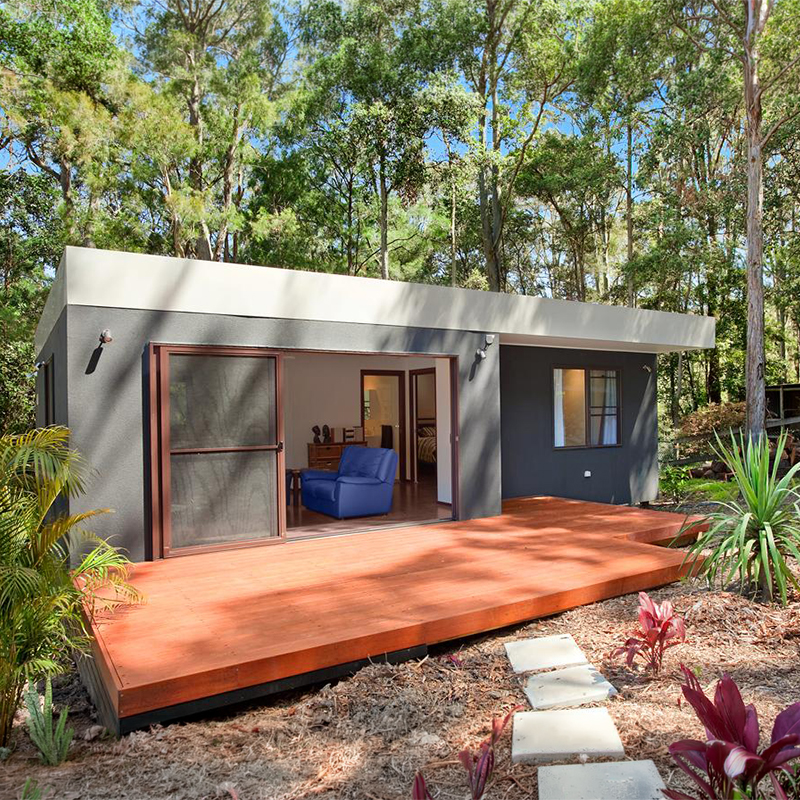
Tight housing supply and rising costs are pushing homeowners to rethink how they use their existing properties.
One of the clearest trends emerging from this shift is the growing popularity of granny flats.
Rather than upgrading to a larger home or relocating, many Australians are choosing to reinvest in what they already own. Adding a secondary dwelling is becoming a practical way to create space, generate income, and increase overall property value.
New data from NAB shows renovation lending increased by 21% in 2025, marking stronger growth than the previous two years. This surge reflects a broader trend toward improving and expanding existing homes rather than entering an increasingly competitive property market.
Online search behaviour supports this shift. Interest in granny flats has risen sharply, particularly in Sydney and Perth. In fact, “granny flat” is now the most searched property-related term in Sydney, with search volumes up 3.1% over the past year.
It also ranks within the top ten search terms in both Perth and Adelaide, indicating widespread national interest.
NAB Executive Denton Pugh suggests this trend reflects a fundamental change in how people view homeownership. It’s no longer just about having a place to live. It’s about making that asset work harder.
With affordability constraints still front of mind and rental demand continuing to rise, homeowners are looking for ways to maximise both space and income potential. A well-designed granny flat can achieve both.
The Housing Industry Association expects this trend to accelerate significantly. Forecasts suggest granny flat construction could increase tenfold by 2026 compared to just four years ago.
That level of growth points to a structural shift, not just a temporary response to market conditions.
For homeowners, the appeal is straightforward. Adding a secondary dwelling can provide accommodation for extended family, create a rental income stream, or even serve as a home office or studio space.
Importantly, it allows owners to unlock additional value without taking on the costs and risks associated with buying a new property.
From an investment perspective, granny flats can improve yield, particularly in areas with strong rental demand. They also add flexibility, which is becoming increasingly valuable in a changing market.
As housing affordability remains a challenge, solutions like this are likely to become more mainstream. It’s a reminder that property strategy isn’t just about what you buy. It’s also about how you use what you already own.