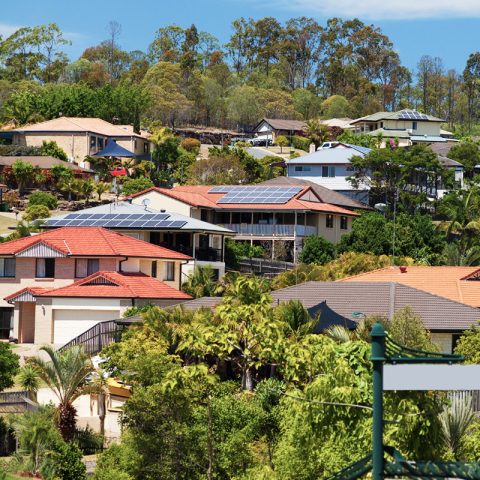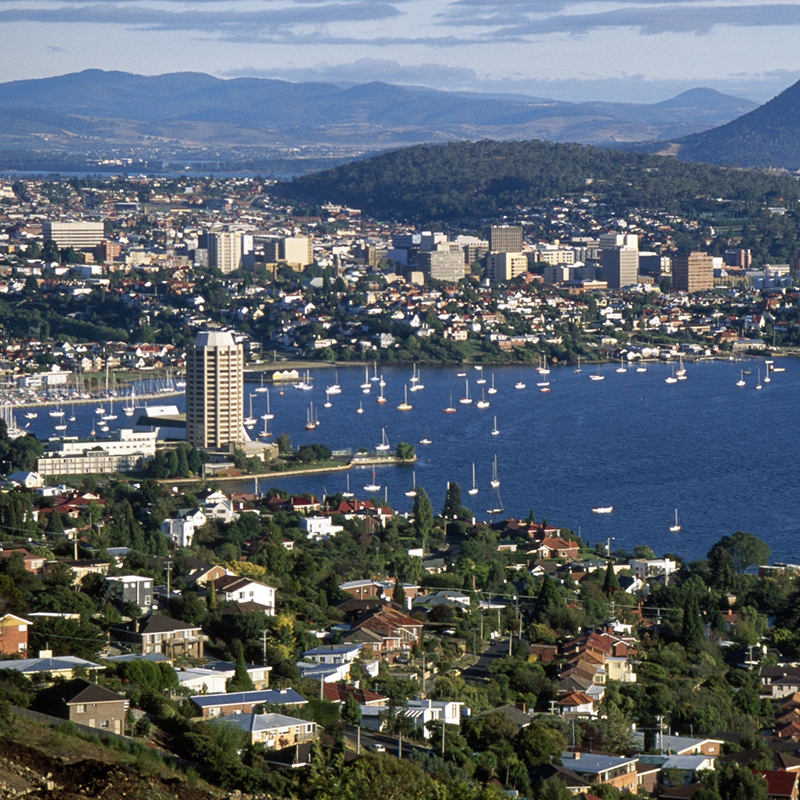
Affordable suburbs across Hobart are experiencing a substantial increase in buyer attention despite softer housing conditions across much of the country. The surge in inquiries demonstrates how affordability can redirect demand when purchasers become priced out of stronger-performing capital cities and begin searching for markets offering lower entry prices, reasonable rental returns and limited housing supply.
REA Group data highlights the scale of the shift. Inquiries per listing in Risdon Vale increased by 245% over the year, placing the suburb among the strongest-performing locations nationally for growth in buyer attention. Other affordable areas around Hobart have also recorded significant increases.
Chigwell, Bridgewater, New Norfolk and Berriedale all ranked among the national top 10 for growth in inquiries per listing. Across those suburbs, increases ranged from 139% to 199%. Tasmania’s renewed buyer interest is not confined to the capital either, with Upper Burnie in the state’s north-west recording a 243% increase.
These figures are particularly notable because they are occurring during a broader national housing slowdown. They demonstrate that national market trends do not necessarily translate evenly to individual cities, suburbs or price segments. While buyers may become more cautious overall, demand can still increase rapidly in locations offering characteristics that are becoming harder to find elsewhere.
Relative affordability is one of the major attractions. Following substantial property price growth in Brisbane, Perth and Adelaide, Hobart is now the second-most affordable capital city. It also offers the second-highest rental yields among Australia’s capitals, creating a combination that can appeal to both investors and owner-occupiers.
For investors, the ability to enter the market at a lower purchase price while achieving a comparatively strong rental return can be appealing. Higher-priced properties require larger deposits, greater borrowing capacity and larger repayments, which have become increasingly difficult to manage as financing conditions have tightened.
Risdon Vale provides a useful example. Properties priced at around $500,000 to $600,000 can produce rental yields close to 5%. For investors comparing those figures with million-dollar properties in other capital cities, the lower entry cost can make the numbers easier to manage.
Owner-occupiers are also contributing to demand. Buyers who have been unable to secure a detached home in more expensive markets may find that affordable Hobart suburbs provide an opportunity to purchase a house without taking on the same level of debt required elsewhere.
Three-bedroom detached houses are proving particularly popular. This type of property can appeal to a wide range of purchasers, including first home buyers, families and investors. Owner-occupiers gain additional space and the lifestyle benefits associated with a standalone home, while investors benefit from a property type capable of attracting a broad tenant base.
Presentation remains important. Well-maintained and appropriately priced affordable homes are attracting strong attention and can sell quickly. Buyers may be searching for value, but that does not mean they are prepared to overlook significant defects or pay any price simply because the property sits within a lower-cost suburb.
Demand at the higher end of the market remains more selective. This reinforces the idea that much of the current momentum is concentrated in affordability-driven segments rather than representing an indiscriminate rise across all Hobart property.
Limited housing supply is another factor supporting interest. When the number of suitable homes available for purchase or rent remains constrained, even a moderate increase in buyer activity can create stronger competition for well-located properties.
Investors nevertheless need to distinguish between rapidly increasing inquiry levels and sustainable long-term performance. A 245% increase in inquiries per listing is a strong indicator of rising attention, but it does not guarantee that property values will rise at the same rate or even continue increasing.
Local employment conditions remain important because they influence both owner-occupier demand and tenants’ capacity to pay rent. Population trends can also provide insight into whether additional housing demand is likely to persist rather than represent a temporary shift.
Street selection deserves similar attention. Two properties within the same suburb can perform differently depending on proximity to services, transport, schools, undesirable land uses and the overall quality of the immediate neighbourhood. Buyers attracted by a suburb’s median price still need to assess the individual property carefully.
Property condition and future housing supply should also form part of the analysis. An inexpensive home requiring extensive repairs can quickly become less affordable once renovation costs are included. Similarly, substantial new housing development may alter rental competition and future resale conditions.
Hobart’s affordable suburbs currently demonstrate how buyer demand can shift as economic and property market conditions change. Lower entry prices, attractive rental yields and constrained supply are drawing attention at a time when purchasers are becoming more cautious elsewhere.
The strongest opportunities are likely to be those where affordability is supported by sound local fundamentals. Buyers who assess employment, population, neighbourhood quality, property condition and future supply alongside the headline inquiry figures will be better positioned to determine whether rising interest represents genuine long-term potential rather than simply a short-term affordability-driven surge.