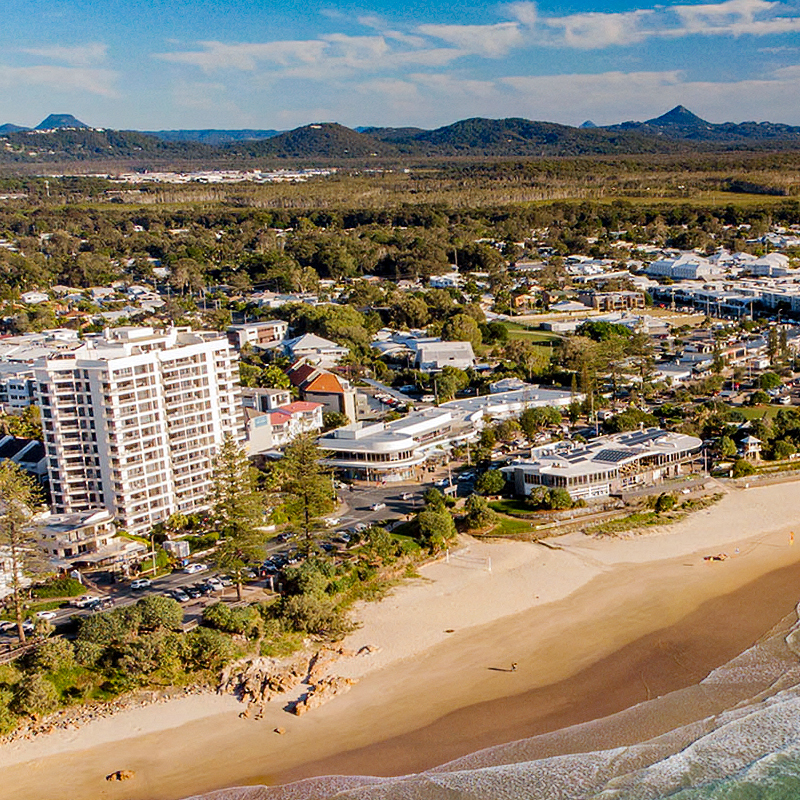
New data from the Regional Movers Index confirms what has been building for several years now. Australia’s internal migration patterns are no longer just reacting to short-term shocks like COVID or interest rate cycles. They are settling into a longer-term structural shift toward regional and coastal living, and the numbers are now hard to ignore.
In the March quarter, capital to regional relocation accounted for 11.9% of all internal migration, the highest share ever recorded. More importantly, the flow imbalance has widened again. For every three people moving from regional areas into the capitals, almost four are moving out. That might sound like a small difference, but over time it compounds into a meaningful redistribution of population pressure.
This is not just about lifestyle anymore. It is about recalibration. Households are actively reassessing what matters. Commute times, housing affordability, school access, space, and lifestyle quality are now being weighed differently to pre pandemic norms. And once those decisions are made, they tend to stick.
What makes this phase different from earlier regional booms is that it is being supported by structural enablers. Hybrid work has reduced the penalty of distance. Digital infrastructure has improved. And capital city housing costs have created a permanent affordability gap that many households are no longer willing or able to absorb.
The destination profile tells the story clearly. The Sunshine Coast, Greater Geelong, Fraser Coast, Moorabool and Lake Macquarie continue to dominate inflows. These are not speculative hotspots. They are lifestyle corridors with established infrastructure, employment bases, and increasingly sophisticated housing markets.
Each of these regions shares a few common traits. They offer relative affordability compared to capital cities, they have strong amenity appeal, and they are within reasonable reach of major urban centres. That combination is powerful because it allows households to keep optionality. They can still access capital city jobs when needed, but they are no longer anchored to them.
Then there is the second layer of the trend, which is arguably more important. Secondary regional centres are now accelerating. Toowoomba’s 236.4% surge in net capital to regional migration is a good example. It shows that demand is no longer confined to coastal lifestyle strips. It is spilling into inland hubs with strong service economies, logistics access, and affordable housing stock.
Broome, Townsville, Clarence Valley and Indigo are also recording strong growth. This broadening of demand matters because it reduces reliance on any single corridor. It also creates a more complex housing market, where multiple regional nodes are competing for population growth at the same time.
From a housing perspective, this is where pressure becomes visible. Regional markets were not designed for sustained multi year inflows at current levels. Land release, construction capacity, and infrastructure planning are all being tested at once. The result is upward pressure on prices in many areas, particularly where supply is slow to respond.
Infrastructure is now the binding constraint in many regions. Councils and state governments are being forced into reactive planning cycles rather than proactive ones. Roads, healthcare systems, schools, and utilities are all under pressure in growth corridors that were previously considered stable or slow moving.
From a lending and investment perspective, financial institutions are also adjusting. This is no longer viewed as a temporary migration spike. As noted by Commonwealth Bank leadership, households are making long term structural decisions. That shifts how credit risk, lending exposure, and development finance are assessed in regional markets.
For buyers and investors, the key takeaway is simple. Regional demand is not a trend that is fading. It is a demand redistribution cycle that is still in its early to mid stages. Markets like the Sunshine Coast are not just absorbing overflow anymore. They are competing directly with capital cities for population share.
That changes how you interpret price growth, vacancy rates, and long term supply pipelines. It also means the next phase is likely to be defined less by “where people move from” and more by “which regional hubs win share of future growth”.