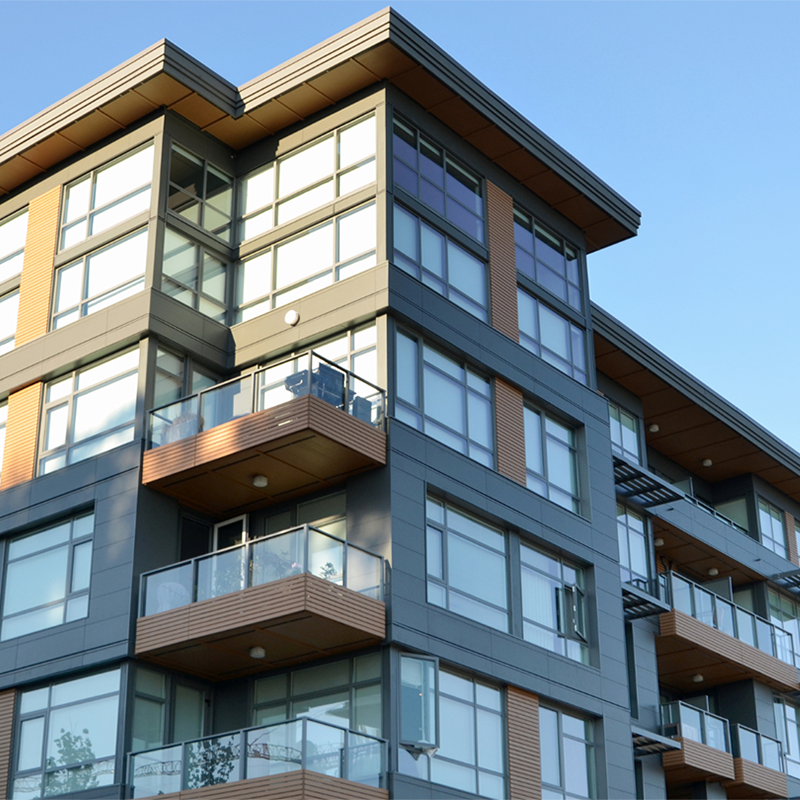
Apartment construction activity has picked up, with approvals reaching a five-year high and accounting for roughly a quarter of all new home approvals.
While still below levels seen a decade ago, the recent lift signals a renewed focus on higher-density housing.
Analysis from OurTop10.com.au shows that South Australia is leading the current upswing, recording a 171% increase in apartment approvals over the past year. New South Wales followed with growth of 62%, while Queensland saw approvals rise by 48%. Western Australia and Victoria also recorded solid gains of 36% and 27% respectively.
Smaller apartment projects are driving much of this growth. Approvals for three-storey apartment buildings increased by 86% over the past year, reflecting a preference for lower-rise developments that are often easier to deliver and better accepted by local communities.
Despite the improvement, activity remains subdued compared to earlier cycles. ABS commencements data shows construction began on 18,996 apartments or townhouses in the September 2025 quarter, well below peak levels recorded a decade earlier.
Affordability remains a key driver of apartment demand. New property value data highlights a substantial price gap between houses and units across capital cities. In most markets, apartment medians sit at around two-thirds of house values.
The difference is particularly pronounced in Sydney, where the median house price exceeds the median unit value by more than $695,000. Melbourne follows with a gap of $350,000, while Brisbane sits at $325,000. Adelaide and Perth record differences of $305,000 and $304,000 respectively.
Rental performance is another advantage. Cotality data for the twelve months to February 2026 shows apartment yields across capital cities generally range between 4% and 5%. Darwin leads with a yield of 7.3%, while Perth sits at 4.9%. Melbourne and Hobart both record yields of 4.8%.
These figures underline why apartments are attracting growing attention from both owner occupiers and investors. Lower entry prices, stronger yields, and improving supply pipelines are combining to lift interest, even as overall housing shortages persist.
While approvals are trending higher, the scale of the shortfall suggests that apartments alone will not resolve supply constraints. However, they remain a critical part of the solution, particularly in well-located urban areas where affordability and rental demand intersect.